“Haniwa Boom”? Akira Ishida&Toshiyuki Morikawa, and Mayumi Tanaka will give an audio guide at the Haniwa exhibition!
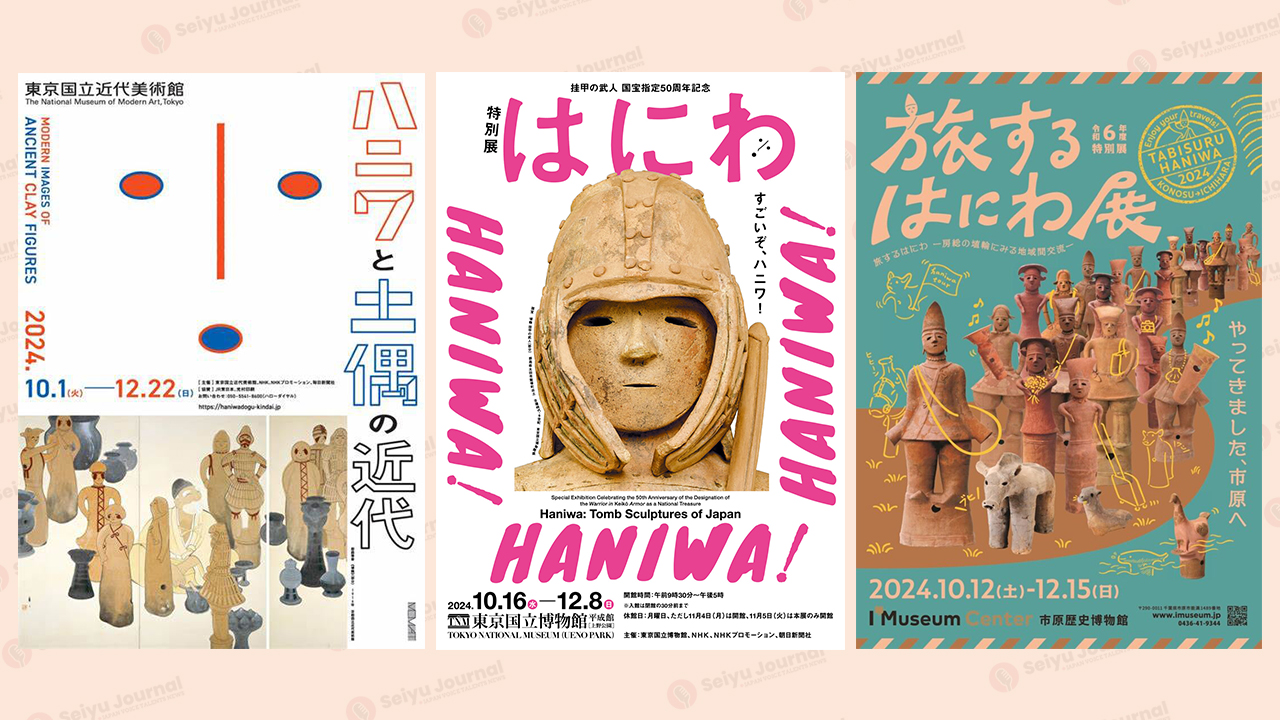
An unprecedented haniwa boom?Starting in October 2024, haniwa exhibitions are going to be held at three different locations. We have put together an exhibition with an audio guide by Akira Ishida and Toshiyuki Morikawa, an exhibition with an audio guide by Mayumi Tanaka, and a haniwa exhibition in Chiba, so that you will not make a mistake in where you go.
Also, I would like to mention a little about Haniwa in this article!
| Exhibition Name | Location | Audio Guide |
| Special Exhibition Celebrating the 50th Anniversary of the Designation of the Warrior in Keiko Armor as a National Tresure Haniwa | Heiseikan, Tokyo National Museum | Akira Ishida, Toshiyuki Morikawa |
| The Modern Exhibition of Haniwa and Clay Figures | The National Museum of Modern Art, Tokyo | Mayumi Tanaka |
| Tabisuru Haniwa (Traveling Haniwa): Interregional Exchange in Haniwa Terra-cotta Tomb Figures in Boso | Ichihara Museum of History | – |
Akira Ishida and Toshiyuki Morikawa will be the audio guides
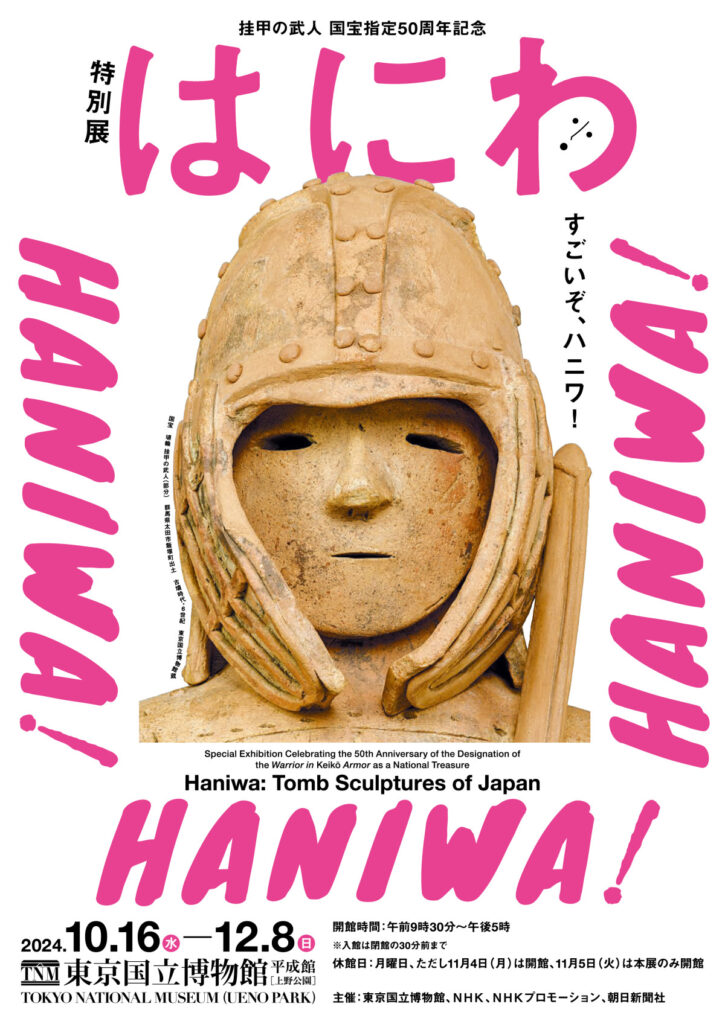
Special Exhibition Celebrating the 50th Anniversary of the Designation of the Warrior in Keiko Armor as a National Tresure Haniwa
The National Treasure “Warrior in Keiko Armor,” a masterpiece of Haniwa (clay terra-cotta tomb figurine).
To commemorate the 50th anniversary of the designation of this haniwa as a national treasure, about 120 selected treasures from all over Japan will be gathered on an unprecedented scale.
From simple and “soft” figures and adorable animals to elaborate armors and houses, this exhibition is full of the charms of haniwa.
This is the first haniwa exhibition to be held at the Tokyo National Museum in about half a century.
There are also various collaborative goods from Felissimo “Museum Club,” “Sumikko Gurashi,” “Hanakappa,” and others!
This is an exhibition not to be missed by those who love Haniwa motifs. There are also interesting goods such as ” Mizura Katusha “.


Outline and Map (Ueno Park, Taito-ku, Tokyo)
| Name of Exhibition | Special Exhibition Celebrating the 50th Anniversary of the Designation of the Warrior in Keiko Armor as a National Tresure Haniwa |
| Venue | Heiseikan, Tokyo National Museum |
| Audio Guide | Akira Ishida, Toshiyuki Morikawa |
| Dates | October 16, 2024 (Wed) – December 8, 2024 (Sun) |
| Hours of Operation | 9:30 a.m. to 5:00 p.m. Open until 8:00 p.m. on Fridays and Saturdays Admission until 30 minutes before closing |
| Closed | Mondays Monday, November 4 (open) Open only for this exhibition on Tuesday, November 5 |
| Nearest Station | 10 min. walk from JR Ueno Station Park Exit or Uguisudani Station South Exit 15 min. walk from Ueno Station on Tokyo Metro Ginza Line and Hibiya Line 15 min. walk from Keisei Ueno Station on the Keisei Electric Railway Line 15 min. walk from Nezu Station on Chiyoda Line |
| Official website | https://haniwa820.exhibit.jp/ |
| Official X | https://x.com/haniwa820_ten |
Post-recording comments by the two voice guide navigators are also available on X!
The post-recording comments of the two voice guide navigators are also available on X!
Akira Ishida
Even if you have never heard of Haniwa or have only seen them in textbooks, please come to the exhibition first. The more you know about Haniwa, the more interesting it is. Please touch the truth of Haniwa by seeing the real thing and listen to the audio guide if you like!
▼Toshiyuki Morikawa
This exhibition will surely start your Haniwa guessing life! The audio guide is a funny and unprecedented friendly audio guide with the funny duo of Dai-chan and Sho-kun. Please enjoy it.
What is Haniwa in the first place?
Haniwa (terra-cotta tomb figurines) are unglazed clay forms that were erected in ancient tombs, which were the tombs of kings. The origin of haniwa dates back to about 1,750 years ago. During the 350 years of the Kofun period, Haniwa were made in different periods and regions, and they tell us about the people surrounding the king and their lives at that time.
After the Kofun period, haniwa were no longer made, but in the Edo period (1603-1867), interest in archaeological artifacts increased and haniwa once again became the focus of attention. Haniwa are loved by a wide range of people, including artists and ordinary citizens, such as Haniwa treasured by celebrities, Haniwa painted by Kiyoshi Saito, a famous print artist, and Haniwa became No.1 in the Haniwa general election (Gunma HANI-1 Grand Prix).
The national treasure “Haniwa Keiko no Samurai” was also excavated in Gunma Prefecture, and the love for Haniwa in Gunma is so strong that a song “Hani Hani Gunma – Let’s dance with Gunma’s Haniwa! ” is available on YouTube.
Sakai City, Osaka Prefecture, has its own PR character, “Haniwa Head of Department” who is officially recognized by Sakai City.

Mayumi Tanaka is the audio guide!
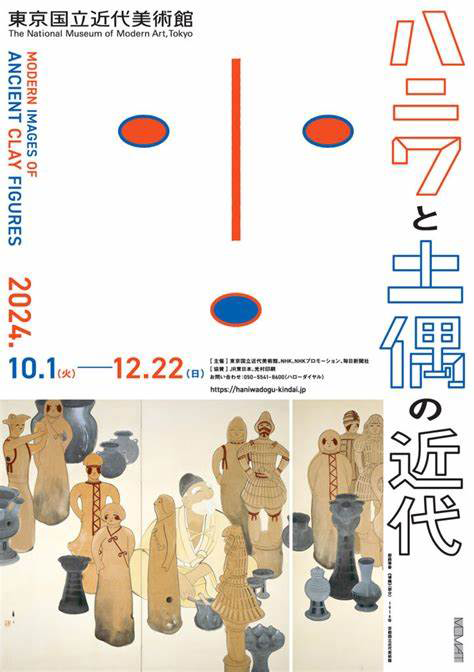
The Modern Exhibition of Haniwa and Clay Figures
Haniwa and clay figurines have been familiar to us since our childhood. In fact, it was not until the modern era that they began to appear at the beginning of history textbooks, and it was not until the modern era that they were discussed as “art.
This is an exhibition that offers a double treat in one, as you can see the other side of the Hani-wa and Dogu boom while appreciating the works of art.
The educational program “Oi, Hanimaru” was aired on NHK! Hanimaru an educational program broadcast on NHK. Mayumi Tanaka, the voice talents who plays Hanimaru, will introduce highlights of the exhibition and the appeal of the works.
The voice of Mayumi Tanaka, who is very popular for her roles in “One Piece” (Monkey D. Luffy), “Dragon Ball” (Krillin), and “Laputa: Castle in the Sky” (Pazoo), is probably the voice guide that overflows with passion!
You may want to remember that Mayumi Tanaka’s voice-guided exhibition also introduces clay figures!
There are “Oi! Hanimaru”collaboration goods are also available..

▼Outline and map (Kitanomaru Park, Chiyoda-ku, Tokyo)
| Exhibition Title | The Modern Age of Haniwa and Clay Figures |
| Venue | The National Museum of Modern Art, Tokyo, 1F Special Exhibition Gallery |
| Audio Guide | Mayumi Tanaka |
| Dates | Tuesday, October 1, 2024 – Sunday, December 22, 2024 Some works may be changed during the exhibition period. |
| Hours of Operation | 9:30 a.m. – 5:00 p.m. Open until 8:00 p.m. on Fridays and Saturdays Admission until 30 minutes before closing. |
| Closed | Mondays *Open on October 14 and November 4 Closed on Tuesday, October 15 and Tuesday, November 5 |
| Nearest Station | Tokyo Metro Tozai Line “Takebashi Station” 3 min. walk from Exit 1b |
| Official website | haniwadogu-kindai.jp |
| Official X | https://x.com/hanidogu_kindai |
What is a Dogu?
Quoted From: What is a Dogu (clay figurine)? The meaning, purpose, types, and differences from haniwa (clay figurines) are explained in an easy-to-understand manner – Rekisiru
Clay figurines are clay figures that are said to have been made in various parts of Japan during the Jomon period, even before the Kofun period of haniwa (clay figurines). Many forms of clay figurines have been excavated, including human, animal, and plant forms. However, the definition of the term “clay figurine” is still ambiguous, and generally speaking, a human-shaped object made in the Jomon period is considered a “clay figurine.
Clay figures were made during the Jomon period and have been excavated from various parts of Japan. Since many of them have arms and legs, or are shaped like breasts or pregnant women, it is assumed that they were made to pray for prosperity, fertility, and rebirth of offspring, but the true purpose is still unclear. However, the true purpose is still unknown. The most significant characteristic of haniwa is that many of them have been destroyed.
Haniwa (clay figurines), on the other hand, are clay pottery made to be placed around burial mounds during the Kofun period. They date from a later period than clay figures.
Cylindrical tombs and figurative haniwa (clay figurines) in the shapes of people and animals have been excavated. Haniwa were made for the purpose of showing the life and authority of the person enshrined in the burial mound, as an offering to the spirits of the dead, or to show funeral rites.
Although it may seem that Dogu and Haniwa are similar, the materials used, the period in which they were made, and the purposes for which they were used are completely different.
You may have seen the “Dogu Warrior” from Dragon Quest or the “King Dogu” monster from White Cat Project. Clay figures are also the motif of those.

A special exhibition at the Ichihara Museum of History,
“Tabisuru Haniwa (Traveling Haniwa): Interregional Exchange in Haniwa Terra-cotta Tomb Figures in Boso”.
There is no voice-over guide information for this exhibition, but it is held at the same time as the exhibition.
The main exhibit material of the Ichihara Museum of History: Haniwa (clay figurines) excavated from the Yamakura No. 1 Tomb [designated as a cultural property by Chiba Prefecture], is known to have been burned at the Oinezuka Haniwa Kiln in Konosu City, Saitama Prefecture, one of the largest Haniwa workshops in eastern Japan, and brought far away to the Ichihara area.
As a special exhibition in 2024, the 20th anniversary of the publication of the excavation report of the Yamakura No. 1 burial mound, many haniwa terra-cotta tomb figurines from the late Kofun period (late 6th century), including a human haniwa excavated from the Ikudezuka haniwa kiln site (Important Cultural Property), will be on display on loan to give a true picture of haniwa culture and inter-regional exchange in the Boso peninsula.
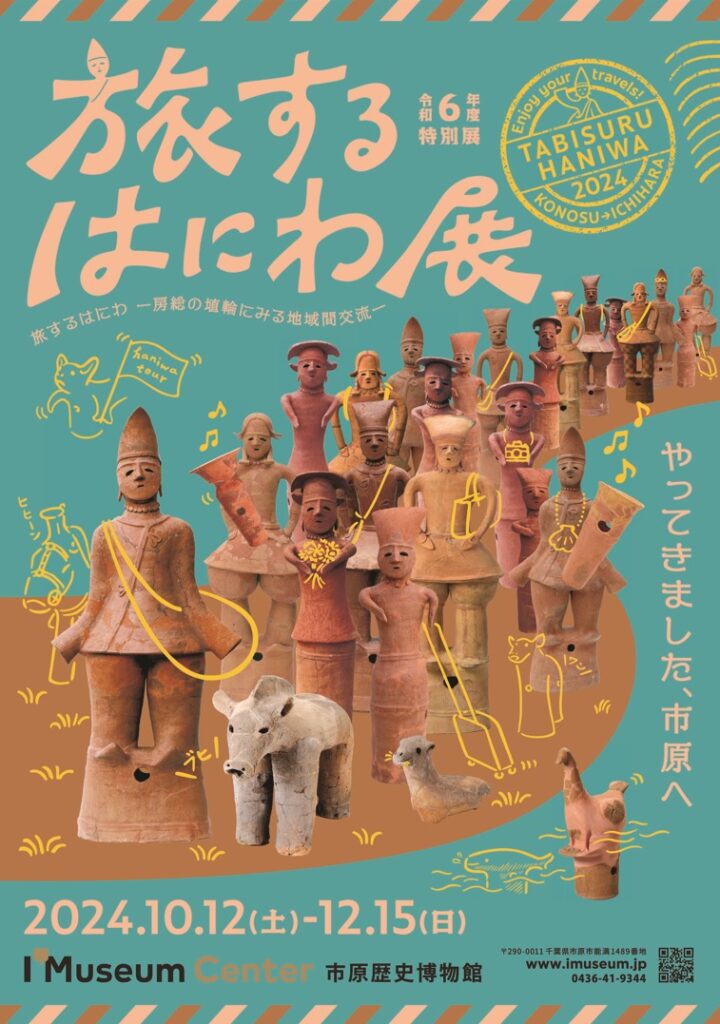
Outline and map of the exhibition (Noman, Ichihara City, Chiba Prefecture)
| Exhibition Title | Tabisuru Haniwa (Traveling Haniwa): Interregional Exchange in Haniwa Terra-cotta Tomb Figures in Boso |
| Venue | Ichihara Museum of History |
| Dates | October 12, 2024 (Sat) – December 15, 2024 (Sun) |
| Hours of Operation | 9:00 – 17:00 (last admission at 16:30) |
| Closed | Mondays (or the following weekday if Monday is a national holiday) Open on October 14 and November 4 Closed on Tuesday, October 15 and Tuesday, November 5 |
| Nearest Station | From Goi Station on JR Uchibo Line Take Kominato Bus bound for “Ichihara History Museum/Chuo Budokan” (20 min.), get off at “Ichihara History Museum” (last stop), 2 min. walk. Shuttle bus available only on weekends and holidays. Please check the following page for information on shuttle buses. https://www.imuseum.jp/riyoannai/acsess/1196.html From Yawatanjuku Station on the JR Uchibo Line Take Kominato Bus bound for Yamakura Kodomonokuni. Get off at “Yamadabashi Higashi” bus stop. 10 min. walk. |
| Official site | https://www.imuseum.jp/rekisi_museum/tokubetsu/2024_tokubetsu/1284.html |
| Official X | https://twitter.com/imuseum2022 |
Various exhibition information from fall to winter 2024!
We have a variety of recommended places to go this fall, where you can listen to voice guidance and narration by voice actors! Please take a look at this page.