Can you drink your oshi? October 1 is “Sake Day” “Miki-no-Mikoto”!
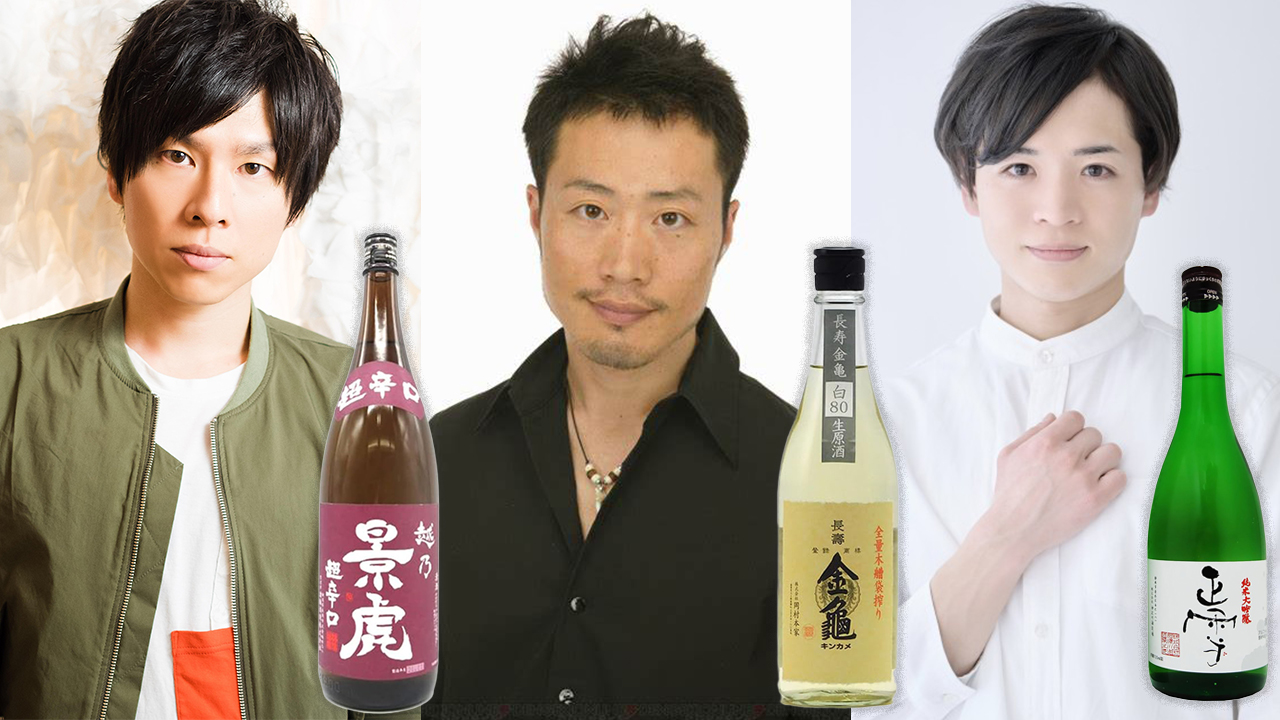
October 1 is Sake Day, so we picked up “Miki-no-Mikoto (Mikimiko)”, a personification of an actual sake brand!
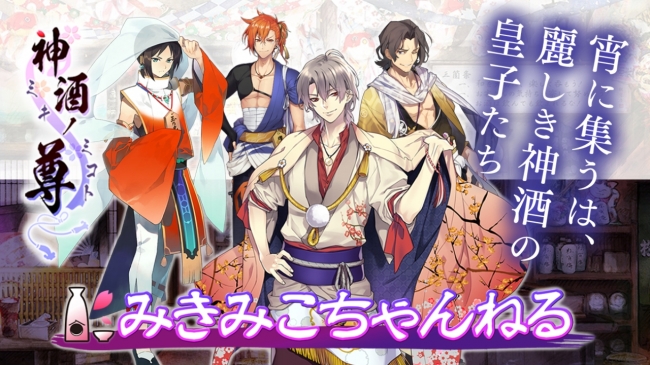
“Mikimiko” is a character project that aims to spread the appeal of sake. The character personifies an actual sake brand and represents it as a character called “Prince of Seishu(Sake)“.
The catchphrase is “You can drink your oshi(fave)! Sake Character Project for Enjoying Sake with the Five Senses, “ and “You can drink your oshi(fave)!” is quite a powerful phrase.
For those of you who don’t know what brand of sake to drink, or don’t know where to start, Please take a look at the list, which we hope will inspire you to drink sake by selecting a character from the list that is played by your favorite voice actor!
*In Japan, drinking alcohol is only allowed after turning 20 years of age!Persons under 20 years of age are prohibited by law from drinking alcohol.Please be careful when visiting Japan!
Project Overview
”Miki-no-Mikoto (Mikimiko)” aims to bring out new charms in the world of sake, which has been a part of Japan’s history, by expressing it in a modern way. The project takes place in a fictional large downtown area called “Yayoimachi,” where the story will revolve around this area. The content is developed in multiple ways from time to time, including apps and goods. In the past, events such as a collaboration with “Tokyo Otsuka Noren-gai” were held.
Toast with Voice Actors and Sake!”Happy Radio(Hapi Radi)”
In a distribution activity called “Mikimiko-Channel,” voice actors and personalities portraying the Prince of Seishu(Sake) convey information and attractions related to sake. For example, seasonal content is provided, such as a distribution themed on hanami sake (cherry blossom viewing) or enjoying sake in winter.
It is distributed in a radio format irregularly, but about once a month!
Mikimiko Channel by Happy Radio(Hapi Radi)! [YouTube] Playlist
List of Prince of Seishu(Sake) Brands and Voice Actors
Each character setting is named after a real sake brand, and the character names are “brand name + prince”. The character settings reflect the characteristics of that brand and the regional characteristics of the manufacturer. This allows the diversity and regional characteristics of sake to be visually expressed and communicated in a more approachable way.
*This is a link to a relatively well-reviewed type on Amazon. If you look further and you may find other tastes.
| Character Name (Prince of Seishu) | Voice Talents | Reference page | |
| 1 | koshi no kanbai | Hiroki Takahashi | Amazon |
| 2 | tama no hikari | Ryohei Arai | Amazon |
| 3 | sawa no i | Masaya Matsukaze | Amazon |
| 4 | kinka me | Eiji Takahashi | Amazon |
| 5 | reizan | Yohei Azakami | Amazon |
| 6 | dewa zakura | Yoshiro Miura | Amazon |
| 7 | kuni mare | Motoki Takagi | Amazon |
| 8 | dassai | Satoshi Inomata | Amazon |
| 9 | koshi no kage tora | Kenji Akabane | Amazon |
| 10 | soutenbou | Taishi Murata | Amazon |
| 11 | hana no i | Kappei Yamaguchi | Amazon |
| 12 | kokushi musou | Daiki Hamano | Amazon |
| 13 | katsura gawa | Yusei Oda | Amazon |
| 14 | takashi mizu | Sota Arai | Amazon |
| 15 | mura yu | Daisuke Sakaguchi | Amazon |
| 16 | ura kasumi | Yuta Kasuya | Amazon |
| 17 | gangi | Yoshihisa Kawahara | Amazon |
| 18 | sakura masamune | Kenji Nojima | Amazon |
| 19 | ichi no kura | Toshiki Iwasawa | Amazon |
| 20 | houshoku | Hiroshi Okamoto | Amazon |
| 21 | tsukasa botan | Daisuke Ono | Amazon |
| 22 | azuma no fumoto | Yuto Suzuki | Amazon |
| 23 | meikyou shisui | Isshin Chiba | Amazon |
| 24 | keichou | Jun Fukushima | 酒造ページ |
| 25 | shinsei | Masato Kato | Amazon |
| 26 | mutsu hassen | Tatsuya Takasoe | Amazon |
| 27 | gessan | Makoto Naruse | Amazon |
| 28 | shousetsu | Hiroyuki Kon | Amazon |
| 29 | taki jiman | Yuta Namaizawa | Amazon |
| 30 | kyuubi | Shu Nonabe | 酒造ページ |
| 31 | nango | Toshiki Kusu | Amazon |
| 32 | gensui | Kazuma Amagase | Amazon |
| 33 | iwa no i | Shogo Maeda | Amazon |
| 34 | chiyo musubi | Shigeki Hirahata | Amazon |
| 35 | kuzuryuu | Genki Okawa | Amazon |
| 36 | kyouto gozan no shiki | Arata Nagai | Amazon |
| 37 | niwa no uguisu | Koudai Sakai | Amazon |
Ranks of Sake (8 ranks of Specific name + Normal Sake)
When I looked up the brand name from Seishu Prince, I was not sure if it was Junmai Daiginjo, Daiginjo, or many other labels! You may have thought, “I don’t understand!
There are 8 types of sake, “Tokutei Meisho-shu” and the rest “Normal Sake,” and the following is a list of the differences between Tokutei Meisho-shu and Normal Sake.
Quoted From: What are the ranks of sake? The difference between Junmai Daiginjo and Junmai-shu explained in an easy-to-understand manner (sakenoshizuku.com)
Sake with Specified Designation
Specified Name Sake | Ingredients | Rice polishing ratio | ||
1 | Junmai type | Junmai Daiginjo | Rice, rice malt | Less than 50 |
2 | Junmai Ginjo | 60% or less | ||
3 | Special Junmai | 60% or less or special production method | ||
4 | Junmai | No regulation | ||
5 | Alcoholic type | Daiginjo | Rice, rice malt, brewing alcohol | 50% or less |
6 | Ginjo | 60% or less | ||
7 | Special Honjozo | 60% or less or special production method | ||
8 | Honjozo | 70% or less | ||
They can be divided into two main types: “Junmai type” made from rice and koji alone, and “Aruze type” which contains brewing alcohol.
Brewing alcohol is alcohol made by fermenting and distilling sugar cane or grains, and is not particularly bad. It is widely used to make sake that has a gorgeous aroma and a refreshing taste, and can be drunk at a wide range of temperatures, making it easy to match sake with Japanese food in general.
Junmai sake, on the other hand, is a sake that expresses the true character of the rice and has a variety of flavors depending on the brand. It is popular for its rich rice flavor and the sake-like taste of sake.
Quoted From: What kind of sake is “Normal Sake”? [Easy to understand and informative! Basics of Sake] | SAKETIMES, a web media specialized in Japanese Sake (sake-times.com)
Is “ordinary sake,” which is sake other than “sake with a specific name”, a sake that does not require a lot of time and effort? No, it is not.
Most of the sake packets and cups sold in supermarkets and convenience stores are sake in the ordinary category, and are enjoyed daily in homes and other places.
The affordable and easy-to-handle packaged sake is perfect for daily evening drinks and home drinking.
It can be described as a kind of table wine, and some packaged sake is delicious chilled and aromatic, such as Kikumasamune Shuzo’s Shiboritate Ginpack, which won the highest gold medal at the “Delicious Sake in a Wine Glass Award 2017”!
The content has sparked my interest and increased my knowledge of sake!
Educational Aspects
So, “Miki-no-Mikoto” is not just entertainment, but also has an educational aspect to spread knowledge and culture about Japanese sake. Through the distribution of the program, information on the types of sake, how it is made, how to drink it, and its history is provided, allowing viewers to learn while having fun.
Regional Promotion
The fact that the projects is based on actual sake brands helps to introduce sake brewers and local culture in each region. This has the potential to contribute to regional development and the revitalization of the sake industry.
Significance of the Project
The “Miki-no-Mikoto” project has the following significance
- Inheritance and dissemination of sake culture
- Promoting the appeal of sake to the younger generation
- Revitalization of the local sake brewing industry
- Modern interpretation and dissemination of traditional Japanese culture
- Educational effect through entertainment
Future Outlook
With the sake market shrinking, projects such as this have the potential to stimulate new demand and expand the market. In particular, it is expected to appeal to the younger generation and overseas markets, and is a remarkable initiative for the sake industry as a whole.
The “Miki-no-Mikoto (Mikimiko)” project reinterprets the traditional Japanese beverage of sake with a modern approach and brings out its new appeal. Through the appeal of its characters and the development of diverse content, the project has succeeded in communicating the depth and enjoyment of sake to a wide range of people.
It is expected to continue to play an important role in contributing to the popularization and development of sake culture.
As October 1 is “Sake Day,” we would like to introduce “Miki-no-Mikoto”!